Every Object on This Planet Has a Blueprint — Including Your Body.
Bridges, buildings, and aircraft all begin with a blueprint that keeps stress from becoming breakdown. Your body follows the same laws of physics — so how does yours measure up?
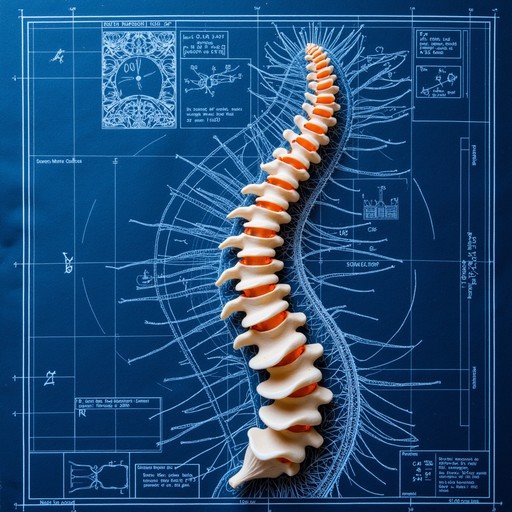
Every engineered structure is built to a blueprint that distributes load evenly, because structural deviation creates stress — and stress leads to breakdown. Your body is no different: it has an optimal structural blueprint, and when posture drifts from it, mechanical stress accumulates and can contribute to chronic pain. AlignSmart measures how your posture compares to that ideal, so imbalance can be caught and corrected early — before it becomes pain.
Does your body really have an ideal posture “blueprint”?
Yes. Like any engineered structure, the body has an optimal alignment that distributes load evenly. When posture deviates from it, certain segments absorb more mechanical stress than they were built for.
Can posture problems actually be measured?
Yes. AlignSmart measures objective markers — forward head translation, shoulder elevation imbalance, pelvic rotation, center-of-gravity shift, and lateral weight distribution — and compares them to ideal alignment parameters.
Why measure your posture before you have pain?
Structural misalignment usually begins years before symptoms appear. Measuring early allows corrective action before chronic breakdown — just as an architect catches foundation shift before cracks widen.
Every engineered structure in the world begins with a blueprint. Bridges are designed to distribute weight evenly. Buildings are engineered to withstand load and pressure. Aircraft are constructed around precise balance calculations. Why? Because structural deviation leads to stress, and stress leads to breakdown.
Your body operates under the same laws of physics. At Symmetry for Health in Folsom, the AlignSmart system approaches chronic pain from this foundational principle: the human body has an optimal structural blueprint. When posture deviates from that blueprint, mechanical stress accumulates — and over time, that stress may contribute to chronic pain.
Why does structural alignment matter so much?
Because the stakes are real. Structural stress on the spine is one of the most common and costly health problems in the world:
How does gravity affect your posture?
Gravity never turns off. Every second of every day, gravitational force travels through your head, shoulders, spine, hips, knees, and feet. If your posture shifts even slightly forward, the whole chain compensates:
- The cervical spine bears increased load
- The lower back compensates
- The shoulders round
- The pelvis tilts
Small deviations compound over time. This is why many individuals develop chronic neck pain, lower back discomfort, sciatic irritation, headaches, and shoulder impingement. The body adapts — but adaptation under imbalance leads to wear.
What does AlignSmart measure?
AlignSmart evaluates measurable alignment markers, including:
- Forward head translation
- Shoulder elevation imbalance
- Pelvic rotation
- Center of gravity shift
- Lateral weight distribution
These measurements let practitioners compare your current posture to ideal structural alignment parameters. Pain patterns often correlate with predictable structural deviations.
Why do most people never measure their posture?
Most people only seek care after pain develops. But structural misalignment often begins years before symptoms appear. Early evaluation allows for corrective action before chronic breakdown sets in. Just as an architect inspects a building for foundation shift before cracks widen, structural posture evaluation identifies imbalance early.
How does your blueprint measure up?
If you’re experiencing recurring back pain, neck tension, or postural fatigue in Folsom, Sacramento, Roseville, El Dorado Hills, Granite Bay, Rocklin, Cameron Park, or the surrounding areas, your blueprint may be contributing. The first step is awareness.
Submit a posture photo and receive your predictive alignment report.
Get My Free Posture Evaluation → www.getalignsmart.com/symmetryThis article is for general educational purposes and is not medical advice. It does not diagnose any condition. If you are experiencing pain, consult a qualified healthcare provider who knows your history.
Sources: World Health Organization, Low Back Pain fact sheet (leading cause of disability; 619M affected in 2020) — who.int; Failed Back Surgery Syndrome, StatPearls / NCBI (51–84% lifetime low back pain) — ncbi.nlm.nih.gov.